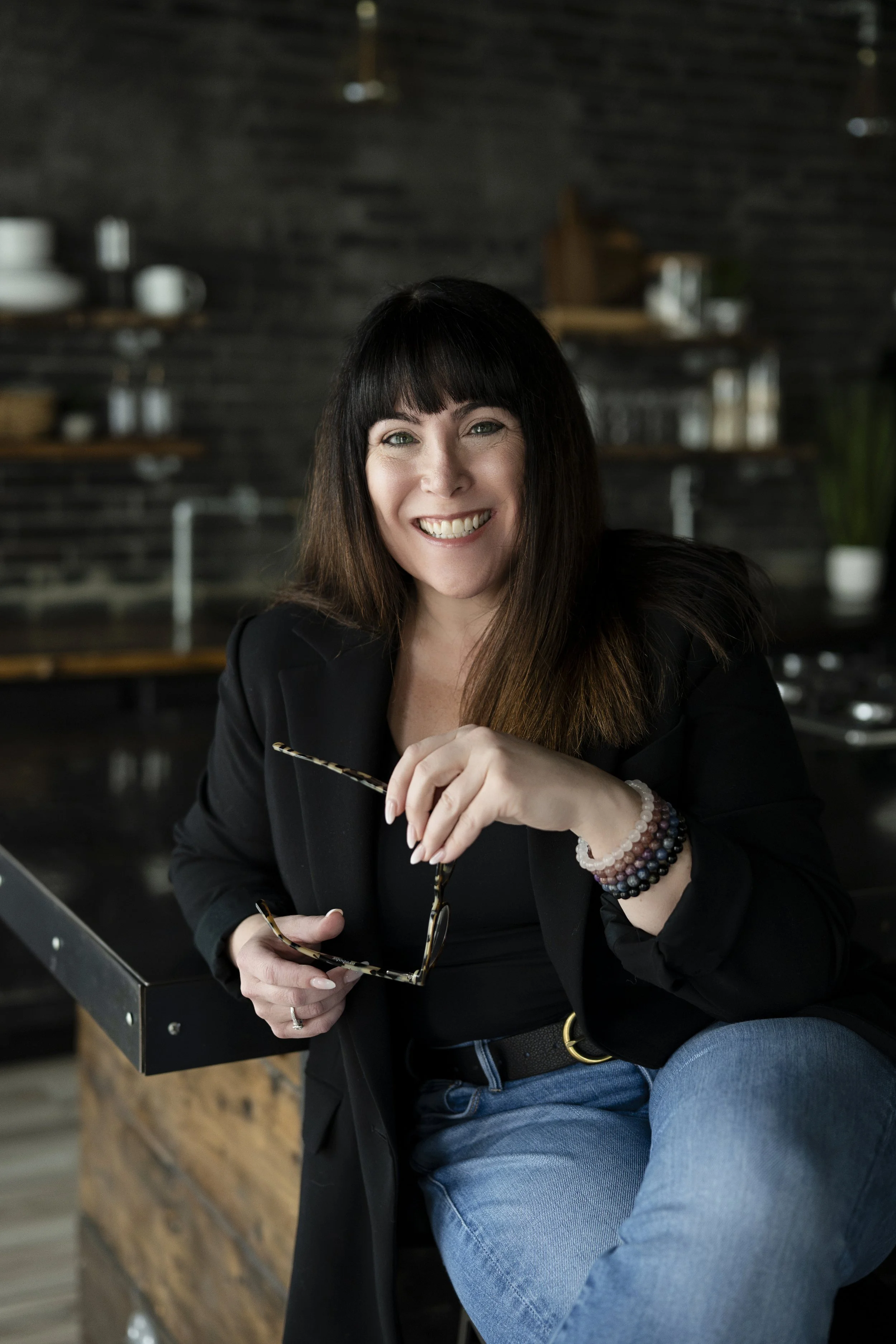
MEET LONI FAGEL
Trauma, Grief & Expressive Arts Therapist
I'm Loni Fagel, a Licensed Professional Clinical Counselor, expressive arts therapist, EMDRIA Approved Consultant™, and Registered Sandtray Therapist. I hold master's degrees in psychology and education, with advanced training in trauma treatment, EMDR, expressive arts therapy, sandtray therapy, infant and early childhood mental health including DC:0–5 assessment and diagnosis, and neuroscience-informed approaches.

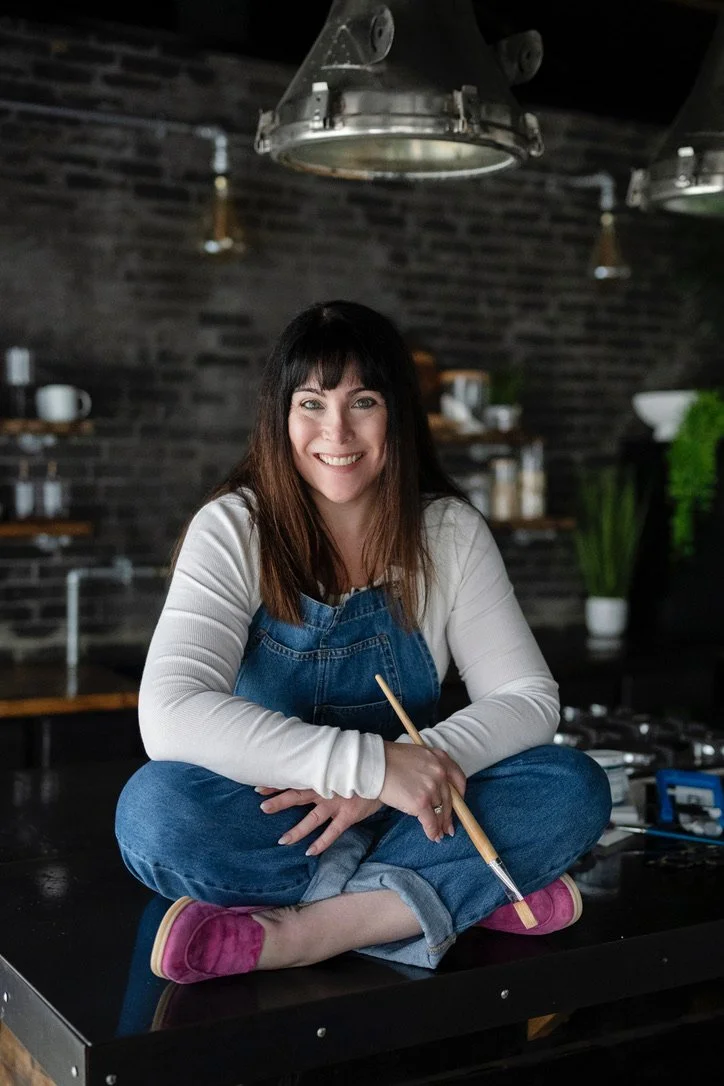
For over a decade, I've had the privilege of sitting alongside people during some of the hardest and most uncertain seasons of their lives.
That work has taken me into therapy rooms, schools, classrooms, crisis situations, professional trainings, and communities. At the heart of my work is trauma, grief and loss, and identity, particularly what happens when an experience changes your sense of safety, your relationship with yourself or your body, or the life you thought you were going to have.
Sometimes there is a clear before and after. A loss. A diagnosis. A traumatic experience. A relationship or identity that changes. Other times, you can't point to one thing. You just know something feels off, and the work becomes understanding what may be underneath it.
Outside of therapy, creativity is a big part of my life. You can usually find me painting or working with mixed media, listening to music, writing, dancing, traveling, hiking, exploring somewhere new, going to live music, or spending time with my Mini Bernedoodle, Lucy Von Doggins.
Who I Work With
I work with children, adolescents, adults, and families navigating:
Grief
In its many forms, including the death of someone we love, traumatic loss, anticipatory grief, and ambiguous loss.
Loss
Medical, health-related, and other loss that come with changes in our bodies, relationships, roles, abilities, identities, or the future we thought we were going to have.
Trauma
Trauma and medical trauma, including medical procedures and healthcare experiences.
Cancer
Cancer, hereditary cancer risk, serious and chronic illness, and previvorship.
Identity
Identity loss, change, and reconstruction.
Life Transitions
Life transitions that are expected, sometimes even celebrated, and still change who we are.
Often these experiences involve more than one kind of loss at the same time, and part of our work may be understanding not only what happened, but what it changed.
How I Work
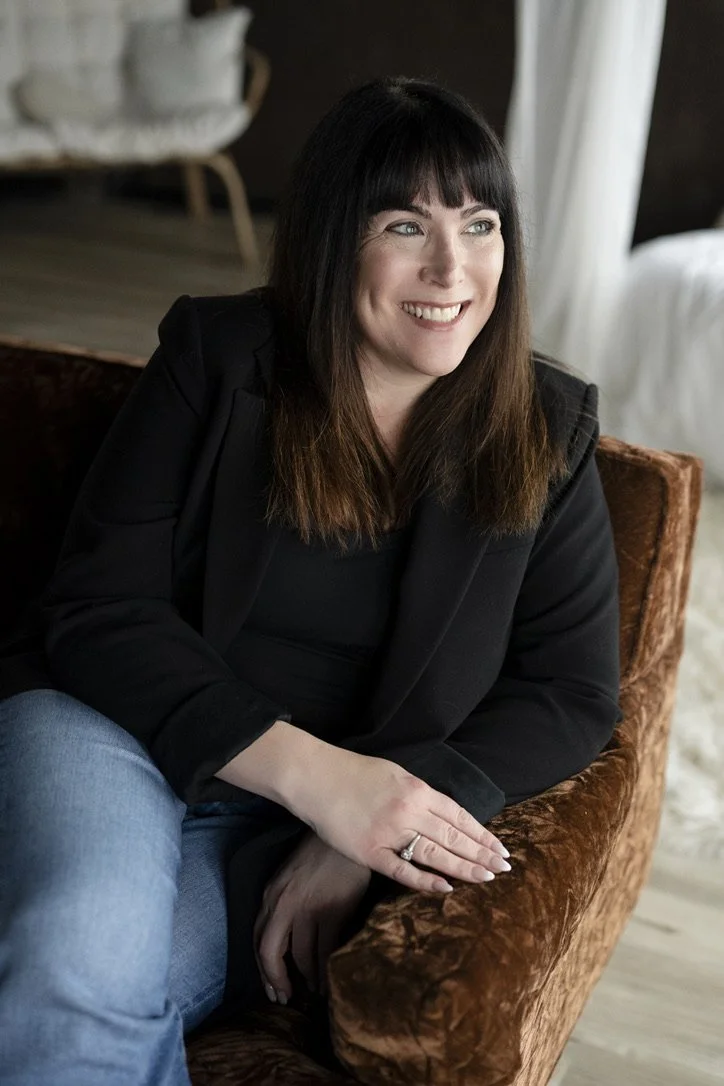
I want to understand not only what is happening, but why. How have your experiences, relationships, losses, patterns, and the ways you learned to survive shaped where you are today? I believe in getting to the root of things rather than managing what is showing up on the surface.
The therapeutic relationship always comes first. From there, I might bring in EMDR, expressive arts, sandtray, or other approaches, depending on what fits you and what we're working on together. I don't think people should have to bend themselves to fit a therapy model. The therapy should fit you.
Expressive arts therapy is at the heart of how I work. Some of what we carry lives deeper than words. Moving between images, movement, sound, and writing can open doors that talking on its own sometimes can't. And please don't worry about being "good at art."
No artistic skill is needed. Ever.

My Philosophy of Healing
Healing often asks for more than understanding. Knowing why something happened doesn't always change what it did to us, and that gap is where so many people get stuck. Experience is what allows integration, which is why healing tends to happen through imagination, embodiment, and meaning-making rather than explanation alone.
Art teaches us to hold opposites, grief alongside gratitude, fear alongside hope, fragility alongside strength, without asking us to choose between them.
Brokenness and beauty can coexist. One does not erase the other.
Resilience is creative. It's the ability to imagine a life beyond the loss and to rediscover who you are through what you make.
Beyond Tessera
Tessera Therapy & Wellness is my clinical practice. My speaking, training, professional consultation, writing, and media work are housed separately through Loni Fagel Training & Consultation.
Through that work, I speak, teach, train, and consult nationally and internationally on medical trauma, grief and loss, traumatic and ambiguous loss, post-traumatic growth, expressive arts therapy, trauma, neuroscience, resilience, and identity. I also serve as adjunct faculty in Saint Mary's University of Minnesota's graduate psychology program, as well as provide training and consultation to therapists and other helping professionals.
I'm the co-author of the children's book Friends of the Bush: A Journey of Safety and Connection, and my writing and work have been featured in The Independent, Cosmopolitan, Bustle, Medium Magazine, and The Daily Mail.

TESSERA THERAPY AND WELLNESS
Tessera grew out of a belief that has shaped the way I think about healing:
We are not broken by what happened to us. We have the chance to create something new and beautiful from the broken pieces.
Healing isn't necessarily about getting back to who you were before. It's about becoming. Sometimes that starts with understanding what happened and what it changed, and making space for what was lost. It can mean reconnecting with the parts of yourself that are still there and learning to carry your experience differently. The story doesn't disappear, but your relationship to it can change.
And from there, it's about rebuilding the self, piece by piece, and discovering who you are now and what you want to create next.